
Hail damage roof repair in Northern Virginia,
found before it becomes a leak.
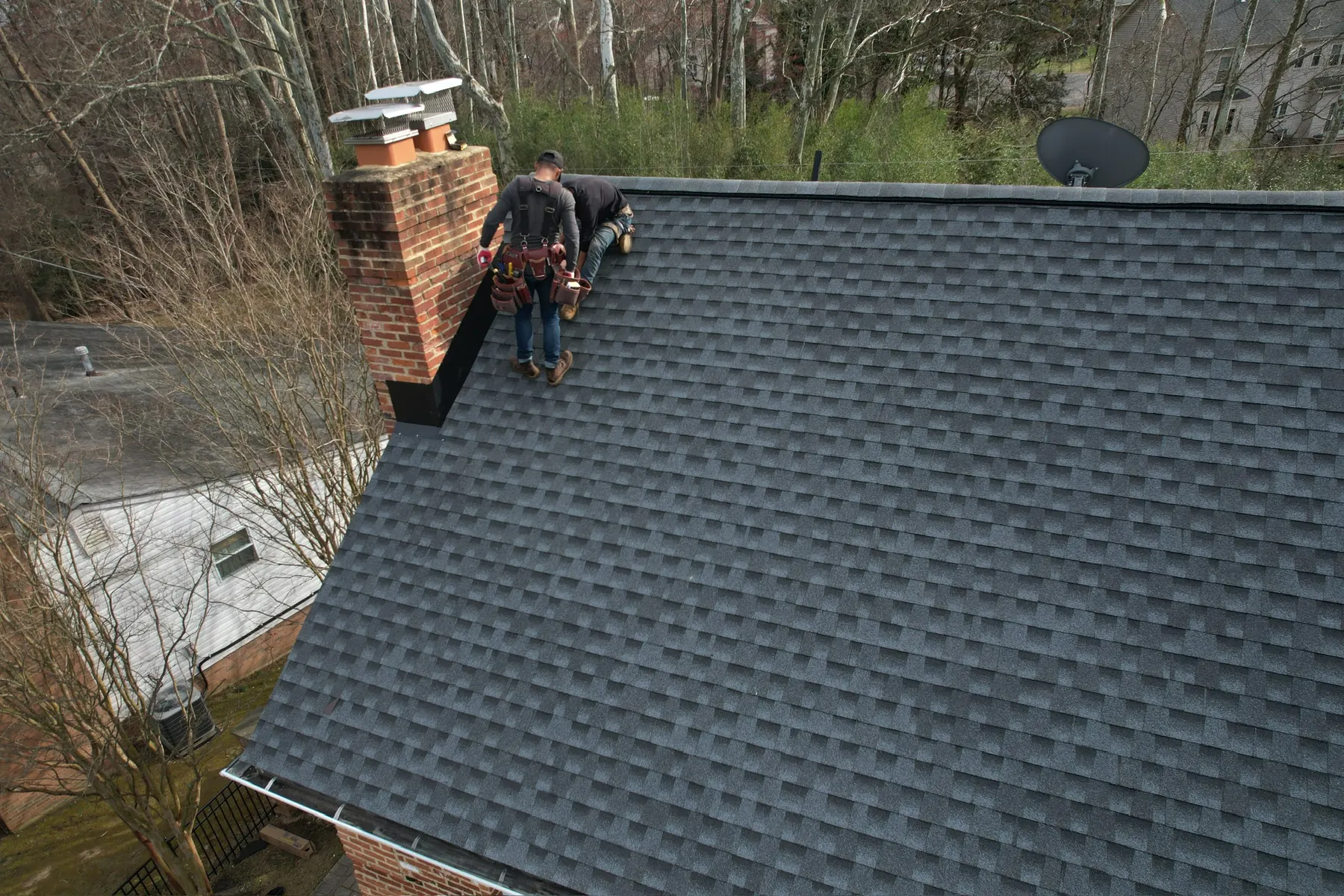
Hail rarely punches a hole. It leaves bruises: granules knocked loose, soft spots in the mat, fiberglass showing through. From the driveway the roof looks fine. From the ridge it doesn't. We get up there within days of the storm, document every hit, and repair or replace based on what's really there.
- Serving Virginia · DC · Maryland
- Licensed & insured
- Every slope checked by hand
- Dated photos for your insurer
- Own crews, never subcontractors
Three kinds of damage, none of them visible from the street.
An asphalt shingle is a fiberglass mat coated in asphalt and topped with ceramic granules. Hail attacks it from the top down. Here's what we find, in the order it usually shows up.
Granule loss
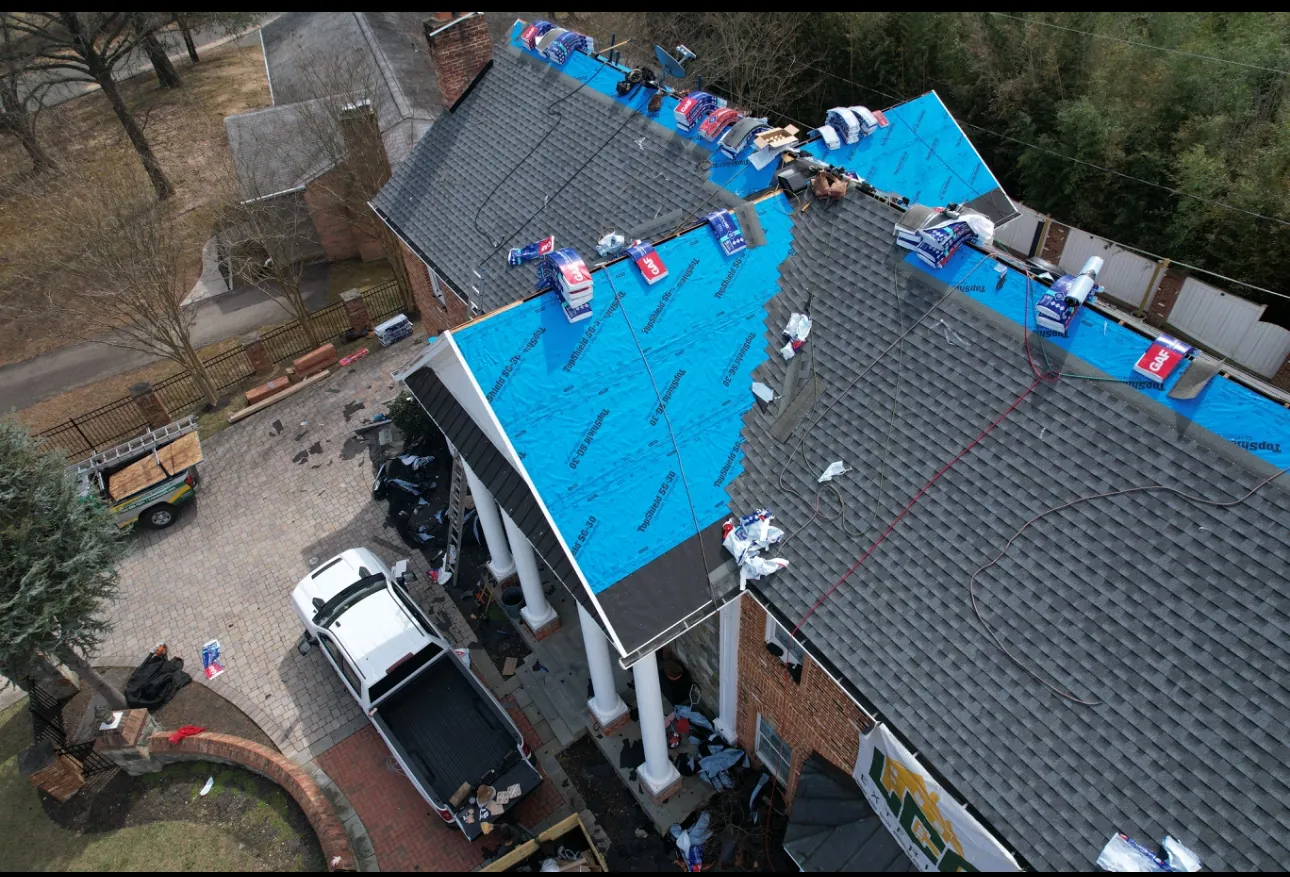
The granules are the shingle's sunscreen. Hail knocks them off in coin-sized patches, and the bare asphalt underneath dries, cracks and curls. Check your gutters and the splash blocks under the downspouts; that's where the granules end up.
Book an inspection →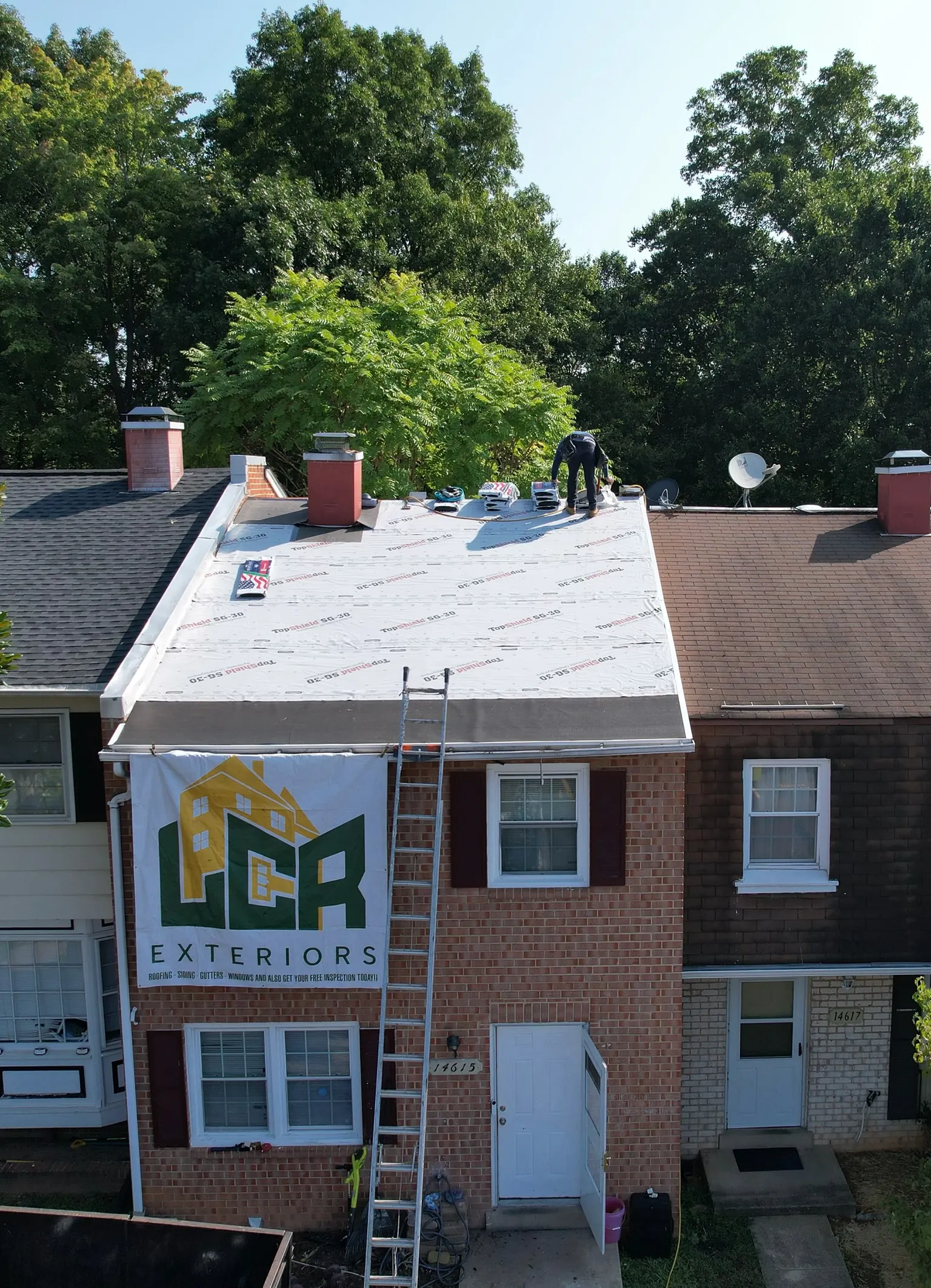
Bruises & soft spots
A hit that doesn't break the surface still fractures the mat underneath. Press on it and it gives like a bruised apple. That spot opens up a season or two later, long after anyone remembers the storm.
Get the roof checked →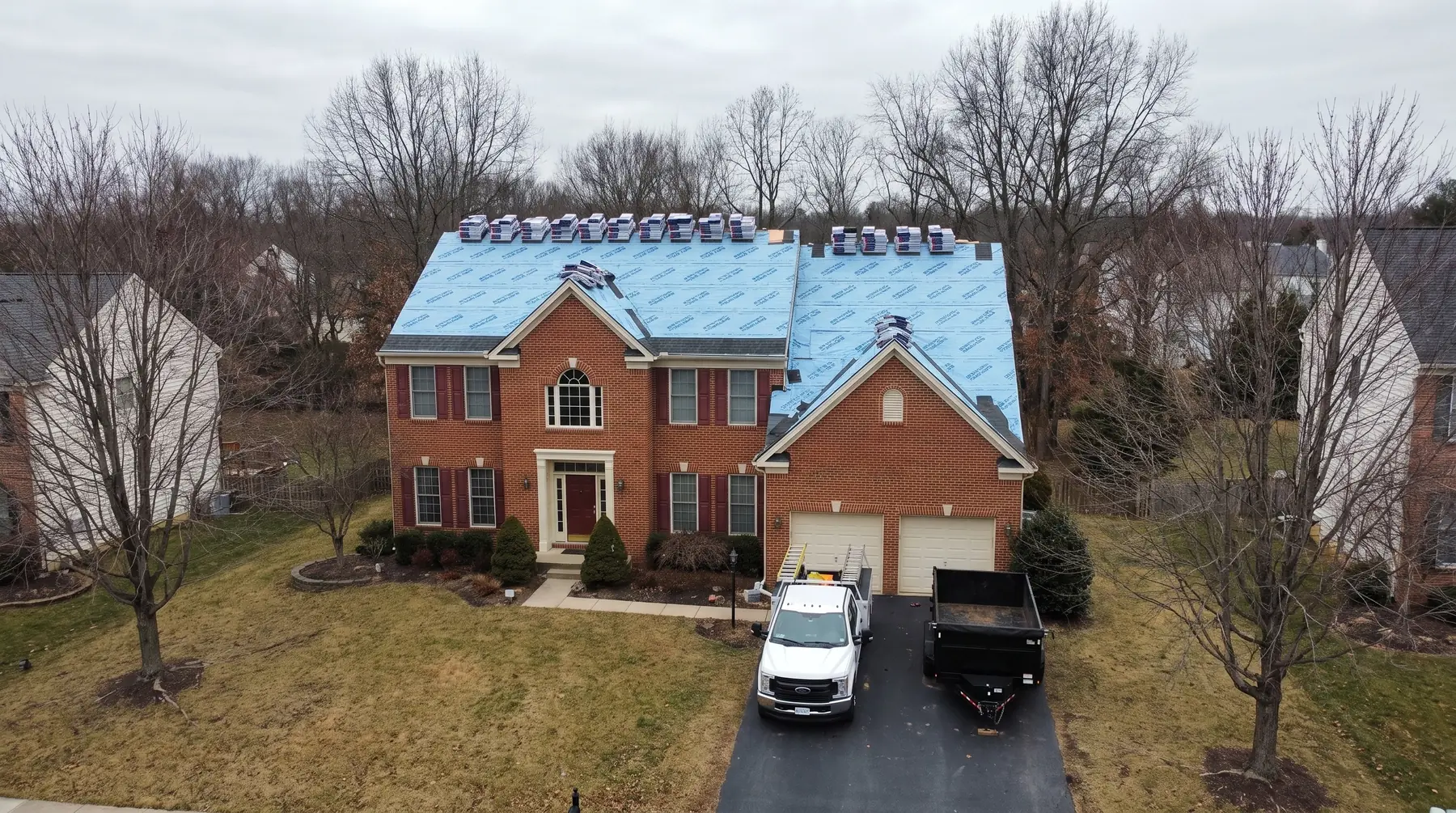
Exposed mat & cracks
Large or wind-driven hail cuts clean through to the fiberglass. Once the mat is exposed, water has a path to the decking. Enough of these on one slope and a repair stops being the smart money.
When it's a replacement →Why you can't see it from the ground: hail bruises are the size of a coin, the same color as the shingle, and scattered at random. They show up in raking light with a hand on the roof, which is the only way we inspect.
If the gutters took hits, the roof did too.
Hail doesn't pick on roofs. It hits everything facing the sky, and the softer surfaces around your house keep a record you can read without a ladder.
Walk the yard and look for
- ·Dents in aluminum gutters, downspouts and the drip edge
- ·Flattened fins on the air-conditioner condenser
- ·Torn or dented window screens
- ·Splatter marks on the deck, fence, mailbox or patio furniture
- ·Chipped paint on wood trim and shutters
What we check once we're up
- ·Soft metals first: vent caps, pipe boots, flashing, ridge vent
- ·Each slope by the direction the storm came from
- ·Granule drifts in the valleys and at the gutter line
- ·Ridge and hip caps, which take the hardest hits
- ·Skylight and chimney flashing, where a bruise becomes a leak fastest
Metal roofs show hail differently and policies often treat them differently. See metal roofing and the guide below on hail claims for metal.
Inspect within days. Document everything.
Call within days of the storm
Hail bruises weather over and the trail goes cold. Call soon after the storm and we're on the roof, often the same day.
Every hit, photographed
We mark the hits on each slope, photograph them with the date in the file, and note the collateral damage below. You get the full set.
We meet your adjuster
If you file a claim, we're on the roof beside the field adjuster so they see the same bruises we found. The claim decision stays between you and your insurer.
Repair or replace
Our own crews do the work. Scattered hits on one slope get repaired. Damage across the whole roof gets a full tear-off, usually in a single day.
"A storm hit our building's roof. I called the LCR team and they got it done fast. Punctual and professional."
Alissa Powell — Storm roof repair
Patch the slope, or replace the roof?
Hail is the one storm that makes this a real question, because the damage is spread out rather than sitting in one spot. Here's how we call it.
Repair usually makes sense when
- ·The hits are confined to one or two slopes
- ·The rest of the roof still has its granules and lies flat
- ·No mat is exposed and the decking underneath is dry
- ·The shingles are young enough to lift without cracking
Replacement is the better buy when
- ·Bruises are spread across most slopes
- ·Granule loss is widespread, with bald patches showing
- ·The shingles are brittle and break when lifted
- ·An insurer's scope already covers a full replacement
Replacement means a full tear-off, never shingles over shingles, with 0% financing for up to 24 months if there's no claim. See roof replacement and roof insurance claims.
Two offices. One storm cell away.
Hail cells are narrow. One street gets hammered and the next stays dry. Being based in Falls Church and Fairfax means we can be on the hit streets the same day, from Arlington to Chantilly.
Hail damage questions, answered.
How soon after a hailstorm should the roof be inspected?
Within days. Bruises are easiest to spot while they're fresh, and your policy gives you a window to report damage that you don't want to spend wondering. The inspection is free, so there's no reason to wait for a leak to tell you.
Can hail damage be repaired, or does the whole roof go?
Both happen. Hits confined to a slope or two get repaired with matched shingles. Damage spread across the roof is a replacement. The photos decide it, and you see them before we recommend anything.
Will my insurance pay for hail damage?
Sudden hail damage is one of the most common reasons a policy helps pay for a roof. Wear and age aren't. We document the damage with dated photos and meet your adjuster on the roof; the claim decision stays between you and your insurer. See roof insurance claims.
A roofer knocked on my door after the storm. Should I let them up?
Ask for three things: a Virginia contractor's license, a local office address, and dated photos of your roof rather than a neighbor's. Our offices are on Leesburg Pike in Falls Church and Main Street in Fairfax, and we'll still be here next spring when a warranty question comes up.
Hail damage guides, written for Northern Virginia.
Hail came through? Let's look before it leaks.
Free, same day, no obligation. We photograph every slope, tell you honestly what's there, and hand you the file. Water coming in now? Call 703-595-7031.